

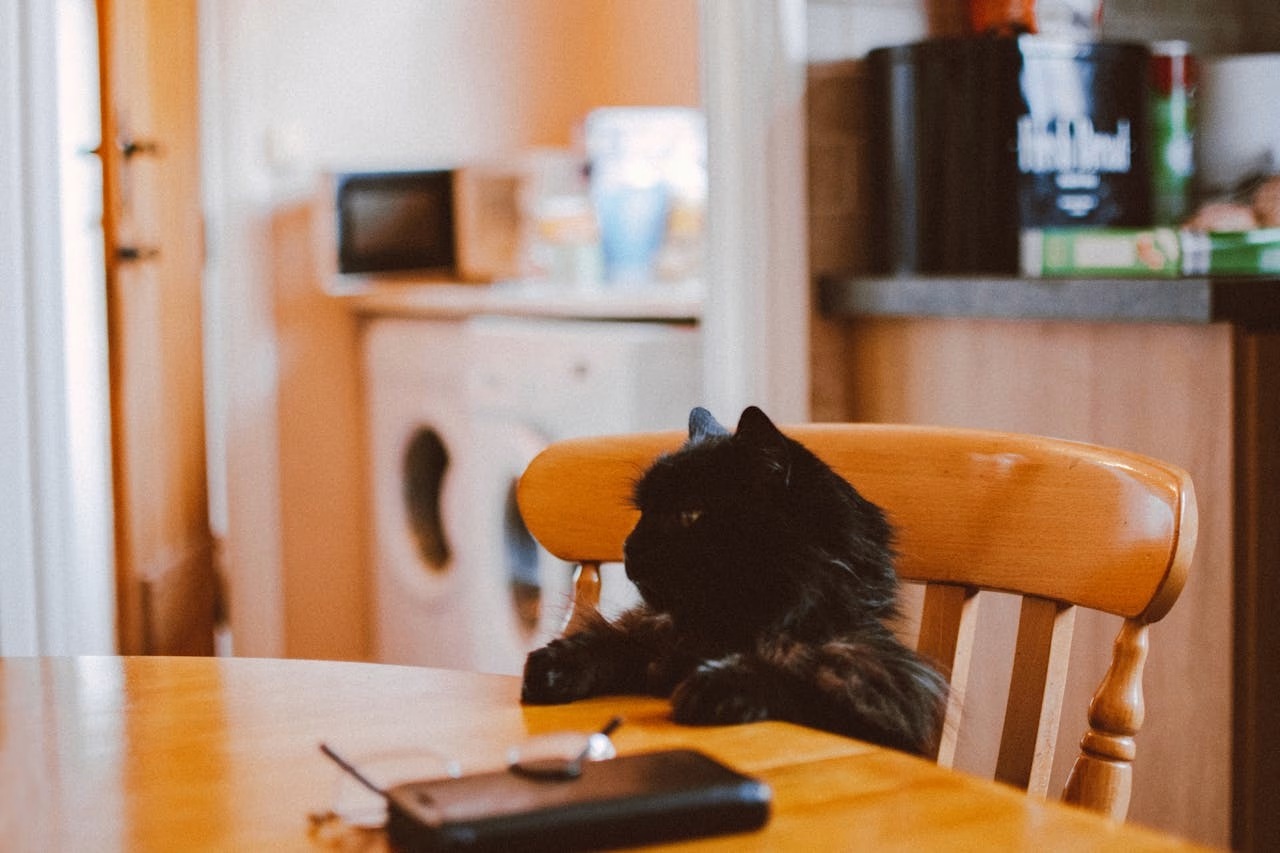
Apartment living reshapes a cat’s daily experience. Walls define territory, sounds travel faster, and human presence becomes constant. Some cats settle into this environment with ease. Others develop signs of tension that owners often misunderstand or ignore.
The difference rarely comes down to square meters or furniture layout. It comes down to behavior. Cats that adapt well to apartment life share specific behavioral traits that allow them to cope with limited space, predictable routines, and close human proximity. Understanding these traits helps prevent stress, frustration, and mismatched adoptions.
This article explores apartment living from a behavioral perspective rather than relying on breed labels or simplified rankings.
How a Cat Experiences Apartment Living
A cat does not evaluate its environment by size alone. It evaluates safety, control, and predictability. In an apartment, the territory remains small but stable. External threats stay limited, and routines repeat daily. For some cats, this stability creates comfort. For others, it leads to frustration when natural behaviors lack proper outlets.
Apartments reduce escape options, concentrate noise, and limit sensory variety. Elevators, neighbors, traffic, and shared walls introduce sounds that some cats tolerate while others find overwhelming. Cats that value routine over exploration often cope better in these conditions.
Behavioral Traits That Support Apartment Adaptation
Cats that thrive indoors usually display low territorial anxiety. They tolerate human movement through their resting areas and accept minor environmental changes without resorting to marking or withdrawal. These cats maintain emotional balance even when space remains shared.
Energy regulation also plays a critical role. Apartment-adapted cats tend to express activity in short, controlled bursts followed by long rest periods. They do not seek constant stimulation or show persistent frustration when activity pauses.
Social flexibility further predicts success. Some cats enjoy frequent interaction while others prefer independence. Both profiles can adapt as long as their social expectations align with the household routine. Problems arise when a highly demanding or highly avoidant cat faces an incompatible environment.
Noise sensitivity remains another key factor. Cats that recover quickly after sudden sounds adjust more easily to apartment life than those that stay hyper-alert or fearful long after disturbances pass.
Finally, cats that self-soothe through resting, grooming, or quiet observation cope better with indoor limits than cats that respond to boredom through vocalization or pacing.
Behavioral Profiles That Often Thrive Indoors
Rather than ranking breeds, Pawlore focuses on recurring behavioral profiles observed across many cats.
Some cats act as calm observers. They spend long periods watching their surroundings, enjoy window access, and prefer stable resting spots. Apartments suit them well when routines stay consistent.
Other cats behave as social companions. Human presence reassures them more than territory size. These cats follow their owners from room to room and adapt smoothly when interaction remains predictable and respectful.
A third group values quiet independence. These cats prefer personal routines and limited interference. Apartments suit them when humans respect their boundaries and avoid forced interaction.
Breed tendencies may influence these profiles, but individual behavior always determines success.
Why Some Cats Struggle Indoors
Cats that struggle in apartments often show early warning signs that owners misinterpret. Restlessness, excessive vocalization, inappropriate elimination, or over-grooming usually signal unmet behavioral needs rather than defiance.
High-drive hunters, noise-sensitive individuals, and strongly territorial cats face greater challenges in confined environments. Without proper outlets, frustration accumulates quietly until behavior deteriorates. Recognizing these patterns early prevents long-term stress.
Choosing the Right Apartment Cat
Selecting a cat for apartment living requires observation rather than assumption. Calm recovery after mild stress, relaxed body posture in new spaces, and balanced interaction preferences matter more than age or appearance.
A cat that rests comfortably, explores without panic, and tolerates routine disruption shows stronger adaptability. Ignoring behavior during early encounters often leads to avoidable problems later.
Supporting Behavioral Balance Indoors
Successful apartment living depends on consistency. Predictable routines help cats feel secure. Vertical access allows observation without competition. Quiet, short play sessions respect limited space while satisfying natural instincts.
Respecting withdrawal signals matters as much as providing attention. Cats thrive when humans respond to behavior rather than imposing expectations.
Conclusion
Apartment living suits many cats when behavioral traits align with environmental limits. Understanding temperament, energy rhythm, and stress response protects both feline welfare and human harmony.
Behavior shapes adaptation far more than labels. Choosing with awareness builds healthier bonds and quieter homes. That principle guides Pawlore’s approach to pet behavior.
Related:
One thought on “Which Cats Truly Adapt to Apartment Living? Behavioral Traits That Matter Most”