

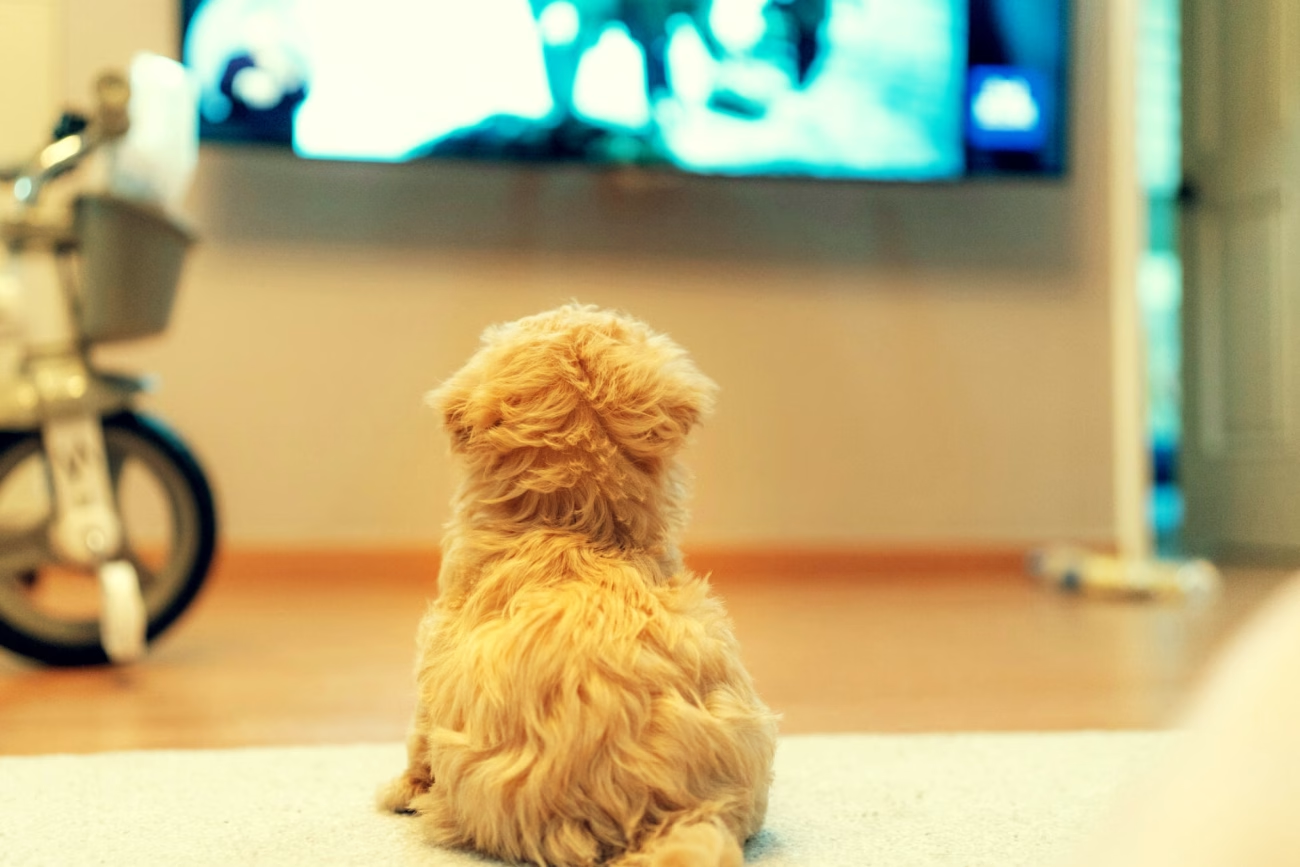
Do Dogs Actually Watch TV When They’re Alone? (Quick Answer)
Yes, many dogs watch TV when home alone. They can see modern screens clearly enough to notice movement, animals, and faces. For some dogs, television provides mild stimulation and background noise. However, it does not cure separation anxiety or replace real mental and physical enrichment.
Now let’s break it down properly.
You leave for work. Before closing the door, you switch on the television. Later, you check your home camera and see your dog sitting quietly, facing the screen. Sometimes they tilt their head. Sometimes they bark at another dog on the screen. Other times, they fall asleep nearby.
Is your dog really watching TV? Or simply reacting to sound?
At Pawlore, we look at behavior through biology and environment. Understanding why dogs watch TV when home alone helps you decide whether this habit supports emotional health or simply fills silence.
Can Dogs See Television the Way Humans Do?
Dogs do not see the world exactly as humans do. Their color vision is more limited. Blues and yellows appear clear, while reds and greens look duller. Motion, however, matters far more than color.
Modern high-definition televisions refresh images quickly enough for dogs to perceive smooth movement. Older screens often flickered in a way that dogs struggled to process. Today’s displays allow them to see running animals, shifting shapes, and facial movement clearly.
In simple terms, dogs can see enough detail to recognize motion and sometimes even species on the screen.
Why Do Some Dogs Watch TV More Than Others?
Not every dog pays attention to television. Interest depends on temperament, breed traits, and individual curiosity.
Herding breeds may react strongly to moving animals. Sporting and hunting breeds may focus on wildlife footage. Companion breeds sometimes respond more to human voices than to visuals.
Age also plays a role. Puppies tend to react with excitement. Senior dogs often ignore screens entirely. Personality remains the strongest predictor.
Environmental familiarity matters too. Dogs raised in homes where TV is frequently on often show more engagement with it.
Does Leaving the TV On Help Dogs When They’re Alone?
This is the real question.
For some dogs, background noise reduces environmental sensitivity. Sudden outside sounds, such as traffic or distant barking, may trigger alert behavior. Consistent indoor sound from television can mask those triggers.
Visual stimulation may also reduce boredom in mildly under-stimulated dogs. Movement on screen offers something dynamic in an otherwise quiet environment.
However, television is passive stimulation. It does not engage your dog physically. It does not provide social interaction. It does not replace exercise or structured mental enrichment.
A well-exercised dog who receives pre-departure interaction benefits far more than one relying solely on a glowing screen.
Can TV Reduce Separation Anxiety?
Television may reduce silence, but it does not treat separation anxiety.
True separation anxiety involves emotional distress. Dogs may pace, whine, destroy furniture, attempt to escape, or show signs of panic shortly after the owner leaves. These behaviors stem from attachment distress rather than boredom.
In such cases, behavioral modification, gradual desensitization training, and environmental enrichment strategies are more effective solutions.
TV can be part of a calming environment. It is rarely a complete solution.
What Do Dogs Prefer Watching?
Dogs tend to respond most strongly to:
Other dogs on screen.
Fast movement across the frame.
High-contrast visuals.
Human faces speaking directly toward the camera.
Some programming specifically designed for dogs uses slower transitions, animal imagery, and calmer tones. While research remains limited, anecdotal evidence suggests some dogs rest more peacefully with predictable visual patterns.
Volume matters. Loud or sudden noises can increase arousal instead of comfort.
Signs Your Dog Benefits From TV
Observe your dog’s body language.
If your dog watches briefly, then lies down calmly nearby, television may provide mild comfort. Relaxed posture, steady breathing, and occasional curiosity indicate neutral or positive engagement.
If your dog becomes overstimulated, barks excessively, or paces, the programming may increase arousal rather than reduce it.
Behavior always provides the answer.
What Works Better Than TV for Dogs Left Alone?
Television can support environmental comfort, but structured enrichment produces deeper results.
Before leaving home, consider a brisk walk to release energy. Short training sessions stimulate the brain and strengthen focus. Puzzle feeders and frozen food toys extend mental engagement long after you leave.
Dogs evolved as active, social animals. Movement and problem-solving satisfy instinctual drives more effectively than passive screen time.
When physical and mental needs are met, dogs rest naturally.
The Psychology Behind Screen Watching
Dogs process their environment through scent, sound, and movement. When left alone, the house becomes predictable and quiet. Television introduces motion and variation.
For curious dogs, this breaks monotony. For confident dogs, it becomes background noise. For anxious dogs, it may provide slight masking of environmental triggers.
The effect depends entirely on the individual.
Should You Leave the TV On for Your Dog?
There is no universal rule.
If your dog appears calmer with background noise and shows no signs of stress, leaving the television on at moderate volume is generally harmless. If your dog struggles with anxiety, focus on training and enrichment first.
Safety remains important. Keep cords secured and ensure remote controls are out of reach.
Television can complement a balanced routine. It should not become the primary coping mechanism.
Frequently Asked Questions
Do dogs understand what happens on TV?
Dogs likely recognize movement and sounds rather than storyline or plot. They react to sensory cues, not narrative meaning.
Is it better to leave music instead of TV?
Some dogs respond more calmly to soft instrumental music. Slow-tempo classical music often promotes relaxation.
Do puppies watch TV more than adult dogs?
Puppies tend to show stronger reactions due to curiosity and higher baseline energy.
Can TV overstimulate dogs?
Yes. Fast-moving scenes or loud sounds may increase arousal in sensitive dogs.
Final Thoughts
Dogs watching TV when home alone is a modern behavior shaped by modern technology. High-definition screens allow them to perceive motion clearly. Some find mild comfort in the sound and movement. Others ignore it completely.
Television can reduce silence and light boredom. It cannot replace exercise, social interaction, or emotional security.
At Pawlore, we emphasize balance. Prepare your dog before leaving. Provide enrichment. Observe their response. The glow of a screen may help slightly, but a well-structured routine supports long-term emotional stability.
Related:
- Probiotics for Dogs: Benefits, Safety, Side Effects, and What Veterinarians Really Say
- How Your Dog’s Food Affects Mood and Daily Behavior: The Hidden Link Between Diet, Energy, and Emotions
- Seasonal Allergies in Dogs: The Silent Spring Itch Most Owners Misunderstand
- 7 Simple Ways to Celebrate National Pet Day That Your Pets Will Actually Enjoy