

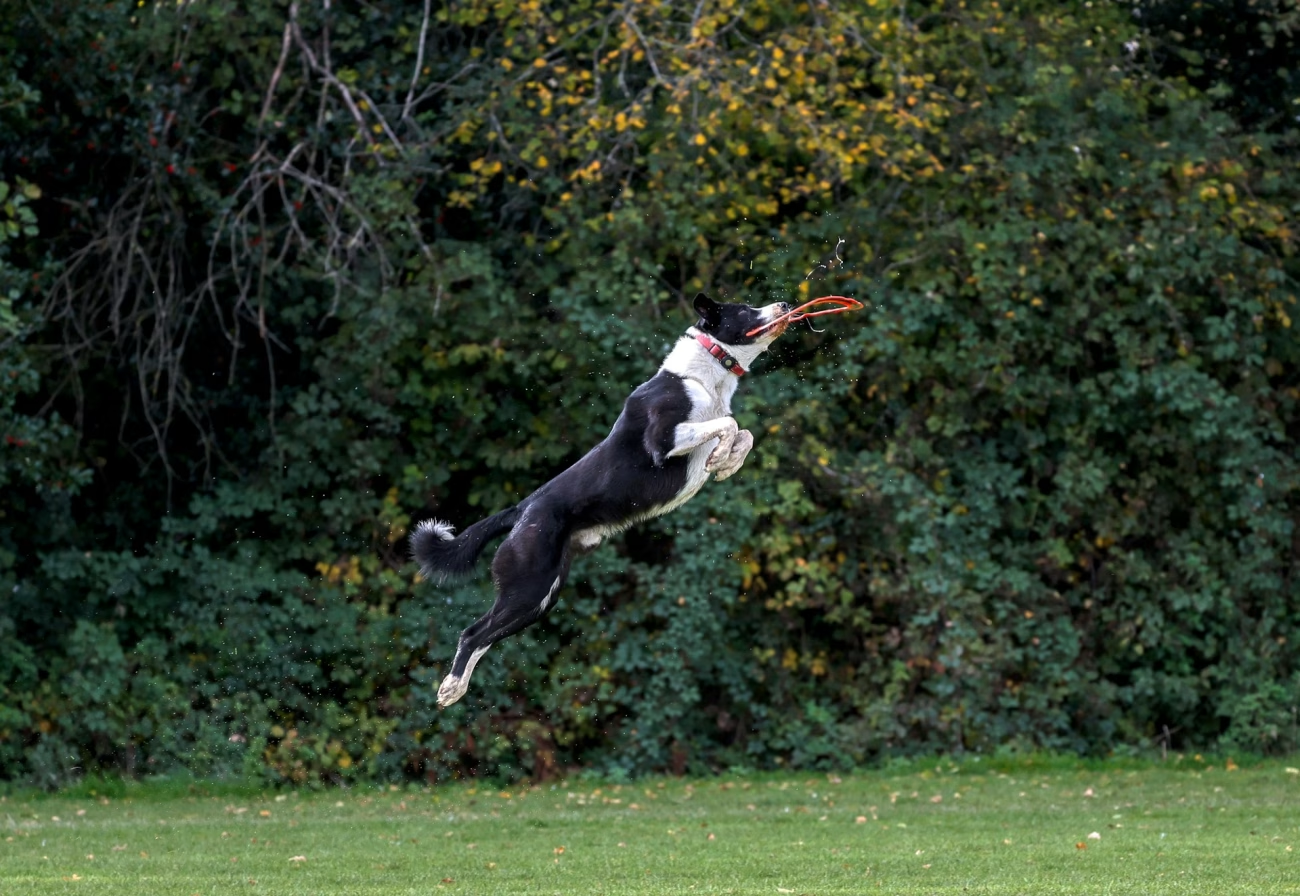
Many future dog owners search for the same thing: a dog that learns quickly. Intelligent, responsive breeds are often presented as ideal companions, especially for first-time owners. They pick up commands fast, respond well to training, and seem easier to live with.
In reality, choosing a dog because it is “easy to train” can quietly complicate daily life. Fast-learning dogs do not just absorb commands. They absorb routines, emotions, inconsistencies, and boredom just as quickly. For many households, this creates challenges that are rarely discussed.
What “Easy to Train” Really Means
When a breed is described as easy to train, it usually means the dog has high cognitive abilities, strong focus on humans, and a natural motivation to work or solve problems. These dogs were often developed for demanding roles such as herding, guarding, retrieving, or assisting humans for long hours.
This mental sharpness is a strength, but it comes with expectations. A fast-learning dog needs constant engagement. Without it, intelligence turns inward and manifests as frustration.
Training success does not equal emotional simplicity.
Intelligence Amplifies Boredom
Highly intelligent dogs notice everything. They quickly learn patterns such as when you leave, how long walks last, and which behaviors get attention.
When mental stimulation drops, boredom escalates faster than in less cognitively demanding breeds. The result often surprises owners.
Common boredom-driven behaviors include destructive chewing, obsessive barking, pacing, demand behaviors, and difficulty settling indoors. These dogs do not act out because they are stubborn. They act out because their brains are underused.
A dog that learns fast also becomes bored fast.
When Training Becomes a Daily Obligation
With smart dogs, basic obedience is rarely the challenge. The challenge is maintaining progression. Repeating the same commands every day offers no mental reward once learning is complete.
Many owners feel pressure to constantly invent new games, tricks, or exercises. When time runs short, frustration grows on both sides.
Instead of simplifying life, high-trainability can create a feeling of never doing enough. The dog seems restless. The owner feels guilty.
Emotional Sensitivity and Over-Awareness
Fast-learning dogs tend to be emotionally perceptive. They read tone, body language, and mood changes with precision. While this sensitivity strengthens bonds, it also increases stress exposure.
Tension in the household, inconsistent rules, or emotional reactions during training affect these dogs deeply. Some become anxious. Others become controlling or hyper-vigilant.
Living with a highly intelligent dog often requires emotional consistency, not just technical training skills.
Why “Easy” Does Not Mean “Low Effort”
There is a misconception that intelligent dogs require less work because they learn quickly. In practice, they require different work.
They need:
- Mental challenges that evolve over time
- Purposeful activities rather than repetitive drills
- Calm structure that allows downtime
- Clear boundaries without constant correction
Without this balance, intelligence turns into stress, and stress turns into behavior problems that feel overwhelming.
Matching the Dog to Your Lifestyle
Before choosing a fast-learning breed, the key question is not “Can I train this dog?” but “Can I live with this level of mental intensity every day?”
Households with predictable schedules, interest in enrichment, and enjoyment of interactive activities often thrive with intelligent dogs. Quieter homes, limited time, or preference for low-engagement companionship may struggle.
There is no superior breed. There is only a suitable match.
Less Demanding Dogs Are Not Less Loving
Dogs with moderate learning speed often adapt more easily to varied routines. They tolerate repetition, enjoy simple enrichment, and settle more readily.
These dogs still bond deeply, learn commands, and offer companionship without constant mental pressure. Slower learning does not equal lower intelligence. It often means lower stress sensitivity.
For many families, this balance supports long-term harmony.
Rethinking the “Best Dog” Idea
The best dog is not the one that learns fastest. It is the one whose needs align with your daily life.
Choosing a dog based solely on trainability risks ignoring emotional, mental, and lifestyle compatibility. When expectations clash with reality, both dog and owner suffer.
Choosing the Right Dog Is About Balance
Highly intelligent, easy-to-train dogs are remarkable companions. They are also demanding, sensitive, and mentally intense. Without adequate stimulation, structure, and emotional consistency, their intelligence becomes a source of stress rather than joy.
For Pawlore readers, the takeaway is clear. A fulfilling relationship does not depend on speed of learning. It depends on balance. When you choose a dog whose needs match your rhythm, training becomes cooperation, not pressure, and daily life becomes calmer for everyone involved.
F.A.Q
Are easy-to-train dog breeds good for beginners?
They can be, but only if the owner can meet their mental and emotional needs consistently.
Why do intelligent dogs get bored easily?
Intelligent dogs process routines quickly and need regular mental challenges to stay balanced.
Do smart dogs require more daily effort?
Yes. While they learn commands quickly, they need ongoing stimulation, structure, and engagement.
Is a less intelligent dog easier to live with?
Often, dogs with moderate learning speed adapt better to varied routines and require less constant mental input.
Related:
One thought on “You Want a Dog That Learns Fast? Why “Easy to Train” Breeds Can Make Daily Life Harder”