

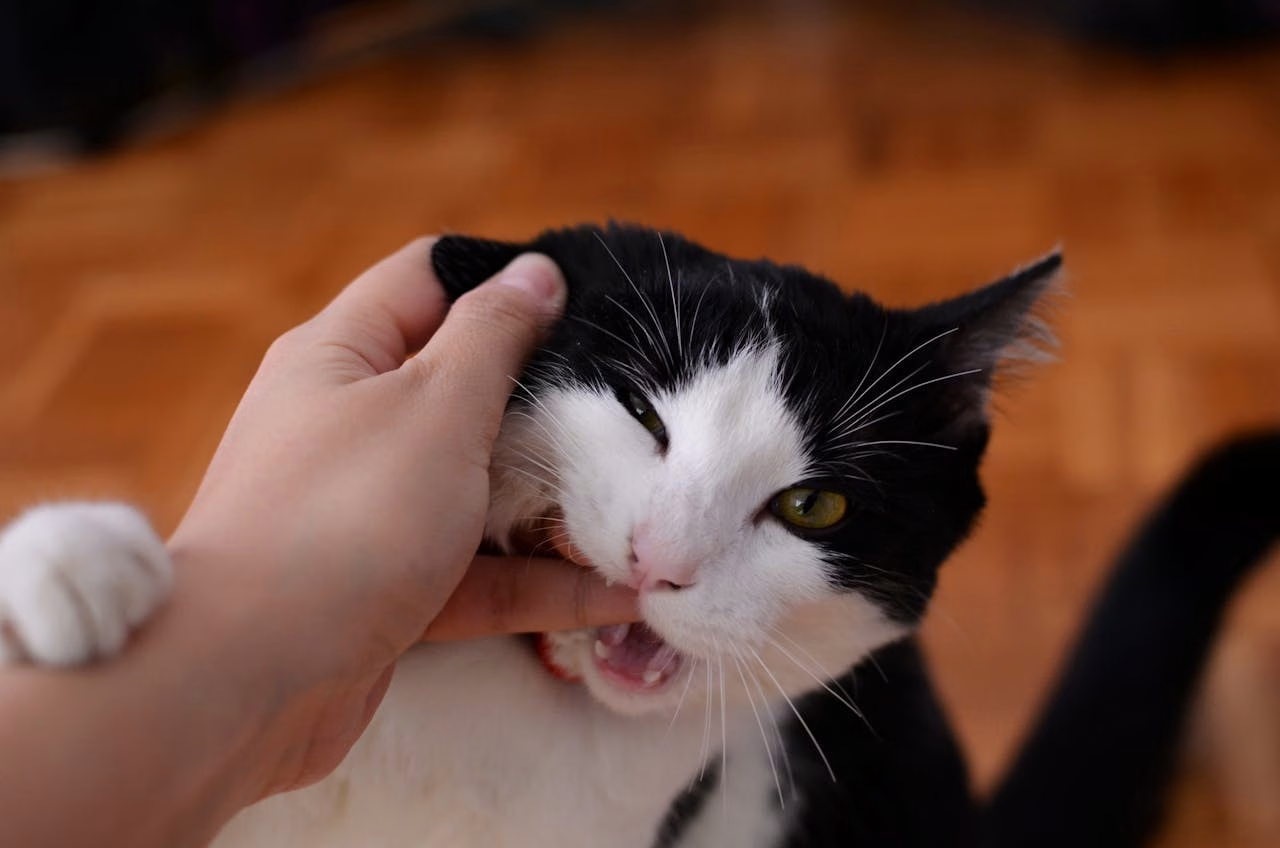
Biting hands and scratching furniture are among the most common behavior problems reported by owners of indoor cats. These behaviors often get labeled as aggression, dominance, or bad habits. In most cases, they are none of those things. They are signals of unmet behavioral needs.
Indoor cats depend entirely on their environment to express natural instincts. When that environment lacks structure, variety, or opportunity for choice, frustration builds. Biting and scratching then become outlets for energy and stress rather than intentional misbehavior.
Reducing these behaviors requires enrichment that works with a cat’s instincts, not against them.
Why Indoor Cats Bite and Scratch
Cats are natural hunters. In the wild, much of their day revolves around stalking, chasing, climbing, scratching, and resting between bursts of activity. Indoor life removes many steps of this natural cycle.
Biting usually appears during play or petting because hands move like prey. Without appropriate outlets, cats redirect hunting energy toward fingers, wrists, or ankles. Scratching furniture happens when cats lack suitable surfaces or when scratching needs are only partially met.
These behaviors intensify when:
- Play sessions are irregular or too short
- Toys fail to mimic prey movement
- Scratching posts are unstable or poorly placed
- Vertical space is limited
- The cat has little control over its environment
Behavior follows biology. When instincts have no outlet, they surface in inconvenient ways.
Why Punishment Makes Things Worse
Punishing a cat for biting or scratching does not address the cause. Yelling, spraying water, or physical correction increases stress and damages trust. Stress often leads to more frequent biting and scratching, not less.
Cats respond best to environmental solutions. When the environment meets their needs, problem behaviors often fade on their own.
Play That Actually Reduces Biting
Effective play is one of the strongest tools for reducing biting. However, many indoor cats receive play that excites them without satisfying the full hunting sequence.
Good play follows a clear pattern: stalk, chase, catch, and release. Wand toys that move unpredictably and stay away from hands allow cats to complete this sequence safely.
Two short, focused play sessions per day are often enough. Ending play with a small meal or treat helps the cat settle into rest, reducing post-play frustration.
Hands should never be used as toys. Once a cat learns that skin is acceptable prey, biting becomes difficult to reverse.
Scratching Is a Core Need, Not a Preference
Scratching maintains claws, stretches muscles, releases tension, and marks territory visually and through scent. It also plays a role in emotional regulation.
Scratching posts should be:
- Tall enough for full-body stretching
- Stable and non-wobbling
- Easy to access
- Placed near sleeping areas or entry points
Offering multiple scratching surfaces in different textures allows cats to choose what feels right. Choice reduces compulsive scratching in unwanted locations.
Vertical Space Reduces Frustration
Cats feel safer and calmer when they can move upward. Vertical space allows climbing, observation, and retreat, all of which lower stress.
Cat trees, shelves, and window perches create movement pathways and resting zones. Cats with access to vertical space often show fewer frustration behaviors, including biting during interaction.
Vertical enrichment also increases confidence, which reduces defensive reactions.
Enrichment That Encourages Choice
Control over small decisions reduces stress. Indoor cats benefit from choosing where to rest, which scratching surface to use, or how to access a view.
Rotating toys weekly instead of leaving them out continuously increases interest. Puzzle feeders and scattered feeding engage problem-solving instincts and reduce excess energy that often turns into biting.
Enrichment works best when it is part of daily life, not an occasional event.
Learning to Read Overstimulation
Many bites happen during petting rather than play. Early signs of overstimulation include tail flicking, skin rippling, ears turning sideways, or sudden stillness.
Stopping interaction at these signals prevents escalation. Respecting limits builds trust and reduces defensive biting over time.
When Enrichment Starts Working
Change rarely happens overnight. Improvement usually appears gradually through calmer play, longer rest periods, reduced furniture damage, and fewer sudden bites.
Consistency matters more than novelty. A stable, enriched environment supports emotional balance.
Understanding the Behavior Behind the Claws
Biting and scratching are not flaws in indoor cats. They are messages about unmet needs. When cats have appropriate outlets for hunting, climbing, and marking, those messages soften or disappear.
For Pawlore readers, enrichment is not about entertaining a cat. It is about respecting how cats experience the world. When indoor environments support natural behavior, cats respond with calmer interactions, healthier routines, and a more peaceful shared space.
Related:
3 thoughts on “Indoor Cat Enrichment That Reduces Biting and Scratching”