

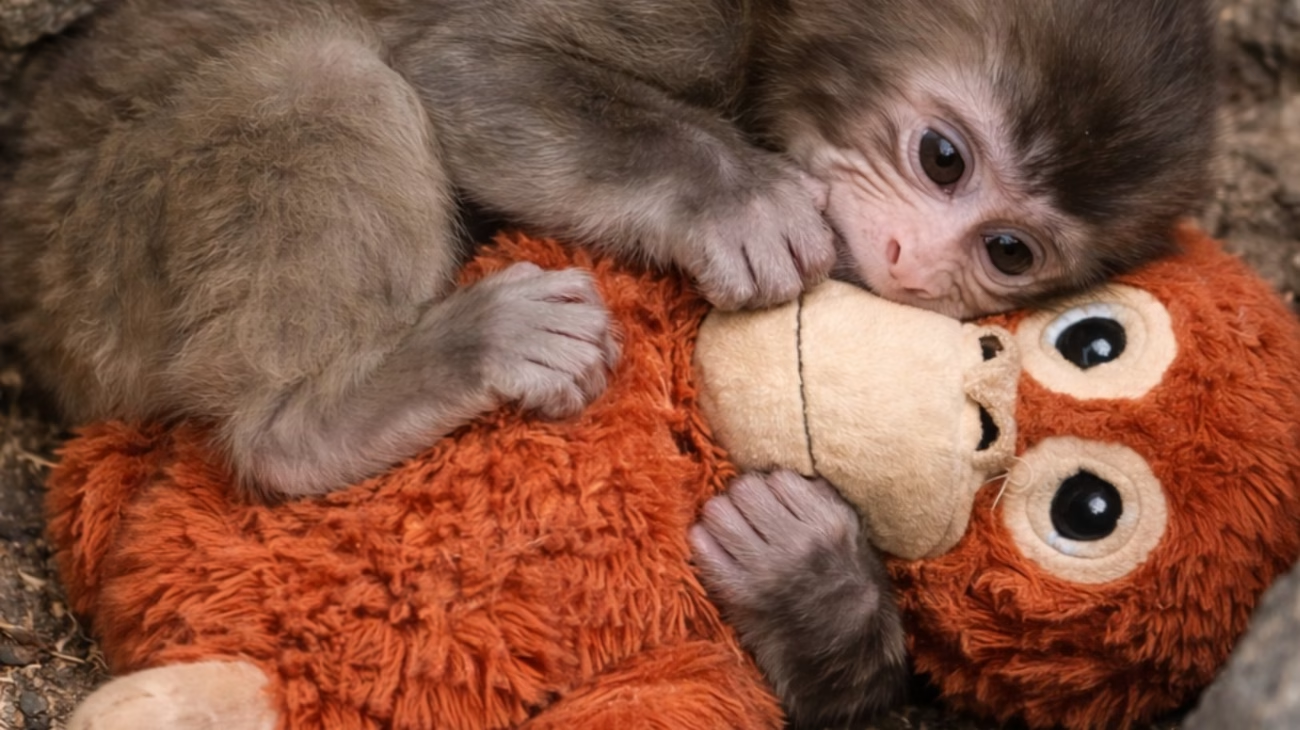
Visitors at Ichikawa City Zoo and Botanical Gardens often stop at one enclosure longer than planned. Inside, a small Japanese macaque moves carefully across the ground, clutching a large stuffed orangutan almost the size of his body.
His name is Punch-kun, and he has become one of Japan’s most talked-about young animals.
Photos of him holding the plush toy spread quickly across social media. Headlines described him as lonely, abandoned, bullied, or brave. But the real story behind Punch and his stuffed companion is more nuanced, and far more important for understanding how primates grow, bond, and adapt.
A Difficult Beginning
Punch was born in July 2025 at Ichikawa City Zoo. Shortly after birth, his mother rejected him. In primates, maternal rejection places an infant at serious risk. Young macaques depend on their mothers for warmth, grooming, protection, and constant physical contact.
Without intervention, survival becomes uncertain.
Zoo caretakers stepped in immediately. They hand-raised Punch, provided controlled feeding, and monitored his health closely. Physically, he responded well. He gained weight. He became active and alert.
Yet survival is not only biological. For primates, attachment shapes emotional stability.
Why the Stuffed Toy Matters
To reduce stress, caretakers introduced a soft stuffed orangutan to Punch’s enclosure. The goal was not to create a viral moment. It was to provide tactile comfort in the absence of a mother.
Punch began clinging to it almost immediately.
He carries it while walking. He presses his face into it when resting. When other monkeys approach, he tightens his grip. The plush object functions as a surrogate attachment figure.
This behavior aligns with well-documented primate psychology. Infant monkeys deprived of maternal contact often redirect bonding behaviors toward soft objects. Physical touch regulates stress responses. Soft contact lowers anxiety markers and promotes calmer exploration.
The stuffed orangutan is not a toy in the human sense. It serves as emotional scaffolding during early development.
Going Viral
When visitors noticed Punch constantly holding the plush, images began circulating online. Japanese social media users started posting supportive messages. International outlets soon followed.
The contrast was powerful: a tiny macaque clinging to a stuffed animal in a structured zoo environment. The image felt tender and symbolic.
Crowds increased at Ichikawa Zoo. Families arrived specifically to see him. Supportive hashtags trended locally. Even corporate figures reportedly donated additional plush toys to ensure he always had access to comfort objects.
Punch became a symbol of resilience.
The Controversial Clip
At the same time, another video drew attention. In it, an adult macaque briefly drags Punch after he approaches another infant in the troop. Some viewers interpreted the moment as bullying.
Zoo officials clarified the context. Japanese macaques live in strict social hierarchies. Adult monkeys enforce boundaries through short corrective actions. These corrections look harsh to human eyes, yet they are standard signals within macaque society.
Young monkeys must learn where they stand.
Punch had recently been introduced to the larger troop. Without maternal rank protection, integration requires patience and repeated social negotiation. Each interaction shapes his future position within the group.
The clip showed a moment of correction, not sustained aggression.
Learning Social Rules Without a Mother
In natural macaque groups, mothers act as social shields. Their presence deters excessive correction from other adults. Punch does not have that advantage.
He must build relationships independently.
That process includes:
- Approaching cautiously
- Retreating after correction
- Observing grooming interactions
- Re-approaching at appropriate times
These cycles may repeat dozens of times before acceptance stabilizes. Behavioral adaptation unfolds gradually.
Zoo staff monitor every interaction carefully. Reports indicate Punch continues to eat well, remain active, and show curiosity toward peers.
Why People Connect With Him
Humans respond strongly to visible attachment behavior. Seeing Punch hug a plush toy triggers empathy. Many people project familiar emotional narratives onto him.
However, interpreting him purely through human emotion risks misunderstanding his development. Punch is not a symbolic figure of sadness. He is a juvenile macaque navigating social structure using available tools.
His persistence stands out. After correction, he returns. After retreating, he observes. After observing, he tries again.
That pattern reflects resilience within a primate framework.
The Science Behind Surrogate Comfort
Research on primate development has long demonstrated the importance of tactile security. Soft contact substitutes reduce distress behaviors in orphaned infants. They encourage exploration while providing a fallback point of reassurance.
Punch’s stuffed companion plays exactly that role.
The object does not replace a troop. It stabilizes him while he learns to join one.
Gradually, as confidence increases and social bonds form, reliance on the surrogate may decrease. Some orphaned primates eventually abandon comfort objects entirely once integration becomes secure.
Whether Punch will follow that trajectory remains to be seen.
Life Inside Ichikawa Zoo
Ichikawa City Zoo maintains structured enclosures that allow macaques to move, climb, and interact within a managed troop environment. Staff supervise introductions carefully to prevent injury.
Introducing a hand-raised infant into an established group always requires strategic timing. Too early risks stress. Too late risks social isolation.
Punch entered the troop during a monitored phase when his physical strength and mobility improved enough to respond to social signals.
Observers continue to track his integration.
A Larger Conversation About Animal Stories
Punch’s journey reveals how quickly wildlife stories transform once online. A single image can become a global narrative. A brief correction can be framed as cruelty.
Primate societies involve hierarchy, correction, competition, and cooperation. These elements coexist. Emotional attachment from viewers should not override biological understanding.
At the same time, Punch’s story highlights the dedication of caretakers who recognize psychological needs alongside physical survival.
Both realities can exist together.
Where Punch Stands Today
Recent updates indicate Punch remains healthy and active at Ichikawa City Zoo. He still carries his plush companion frequently. He continues interacting with troop members under supervision.
His story is ongoing.
Visitors still pause at the enclosure. Cameras still rise. Conversations soften when he walks by, holding the stuffed orangutan close.
In that small figure, people see courage. In reality, they are watching development in progress.
Related:
- Feeding the Winter King: 5 Essential Foods for Backyard Squirrels
- Penguins That Mate for Life: Myths and Truths About Loyalty in the Cold
- Do Slow Feeder Dog Bowls Improve Digestion and Prevent Bloating? A Vet-Informed Guide for Pet Owners
- How to Create the Ideal Garden for Your Cat: Safe, Stimulating, and Age-Appropriate Design
- 10 Cat Breeds That Make Perfect Pets for Families and First-Time Owners